
Last updated: May 2026. Prices, opening hours, and entry requirements shift with seasons and policy changes — confirm directly with operators or official sources before booking. U.S. travelers should check travel.state.gov for current entry requirements.
In Tortuguero the sand is black, the air feels like warm wet cotton, and by the time a guide finally motions you forward your shirt is already sticking to your back. This is one of those Costa Rica experiences that gets prettied up online. Too much. Volunteering with sea turtles can be meaningful, but its not a beachy feel-good add-on between spa treatments. It is rules, timing, mud, red lights, patience and sometimes no turtle at all. Here’s what actually matters.
The reality versus the brochure
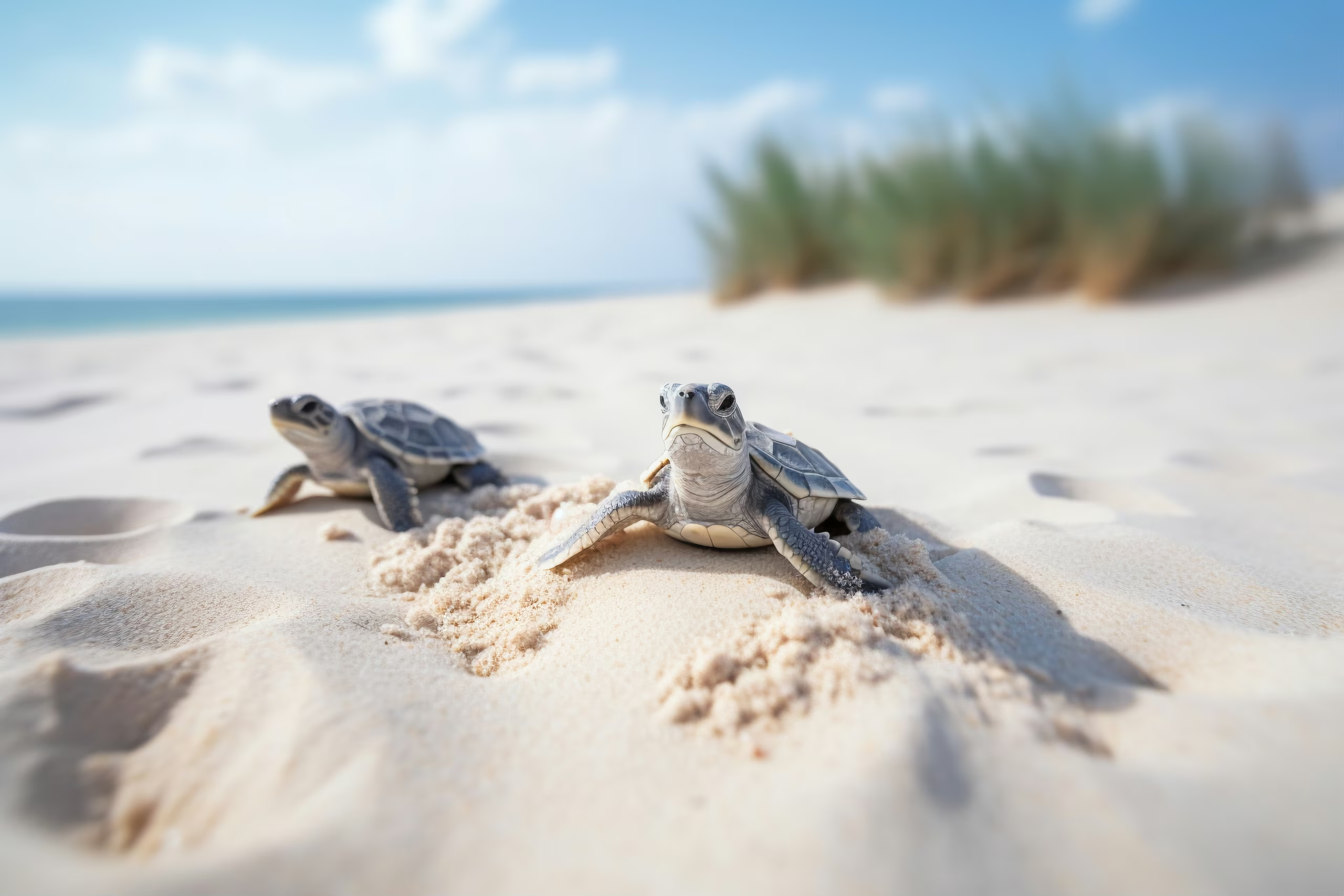
Let’s start with the big correction: ethical sea turtle travel in Costa Rica is not cuddling hatchlings, taking flash photos, or “helping” by wandering onto beaches alone. The serious sites are regulated for a reason. In Tortuguero, Ostional and Las Baulas, access is controlled by guides, permits and community rules because these beaches are working conservation zones first and travel products second.
That also means luxury travelers need to edit their expectations. Some programs are true volunteer placements with six to eight hours of work, often at night, including patrols, nest monitoring, hatchery duty and data recording. Others are simply ethical guided turtle experiences with a conservation fee attached. Those are not the same product. That matters.
Tortuguero is the serious choice for green turtles
Tortuguero National Park on the northern Caribbean coast is the place with the scientific muscle. The Sea Turtle Conservancy calls its Tortuguero work the longest continuous sea turtle monitoring project anywhere in the world, and that alone should tell you this is not a casual beach walk. The park protects roughly 77,000 acres of rainforest, canals and beach, and you reach it by boat or small plane rather than by car.
If you care about green turtles, Tortuguero is the one. Peak nesting runs July to October, especially August and September, while leatherbacks use the same coast more in March through May. There are less guarantees than Instagram suggests, but if you want the site with the deepest turtle identity, its the heavyweight site.
Tortuguero looks romantic in photos, in real life it is wet, dark and logistically fussy. You need advance online tickets through SINAC, foreign-adult entry runs about US$15 plus tax, and the best turtle nights still depend on tides, weather, and ranger calls. Standard group turtle tours are commonly around US$27–35. Lodge packages at places like Laguna Lodge run from roughly US$292–329 per person for 2D/1N, and around US$388–421 for 3D/2N with meals and standard tours, park fees extra.
Ostional is about scale, not polish
Ostional Wildlife Refuge on the Nicoya Peninsula is the place for olive ridley arribadas — the mass nesting events that can make the beach feel almost industrial in its force. You are not there for quiet elegance. your there for scale, noise, black volcanic sand, and the weird physical reality of thousands of turtles scraping forward at once. When people say they want a sea turtle experience that feels bigger than a single animal sighting, this is usually what they mean.
At Ostional independent access is not allowed. You need a certified guide, and that rule is a good filter for whether an operator is serious or sloppy. Tours from Nosara or Sámara usually cost about US$50–80 per person. The best mass events tend to cluster around the new moon, often August through December, especially September to November. Bring dark clothing, patience and luck. A lot.
The complication here is comfort. Ostional is close to Nosara — about 15 minutes away — but Nosara is one of Costa Rica’s priciest wellness bubbles, with casual entrées often running US$10–15 and nicer meals climbing fast. That can work well for travelers who want one ethical wildlife evening folded into a more polished beach stay. It is much shakier if you think you are signing up for a cheap volunteer detour.
Playa Grande is about leatherbacks, but keep expectations sane
Las Baulas Marine National Park exists to protect leatherbacks on Playa Grande, Ventanas and Langosta, and SINAC’s official page is very clear on the mission. The official nesting season is October 20 to February 15. Beach access is restricted, night access is guided only, and its conservation first.
The catch — and you need to know this before building a whole trip around it — is that the official leatherback sighting tour has reportedly remained suspended since 2018 because nesting numbers are so low. So yes, Playa Grande belongs in the conversation, especially for travelers staying in Guanacaste near Tamarindo or Las Catalinas, but it should be treated as a conservation-minded maybe, not a guaranteed leatherback night. That distinction matters if you are trying to build a high-end trip that can still accomodate disappointment gracefully.
Where to stay if you want comfort without fake conservation
For Tortuguero, I would stay at a lodge package property rather than improvise the whole thing yourself unless you really enjoy stitching together boat transfers, meal logistics, and park bookings. Laguna Lodge and Pachira Lodge are not “ultra-luxury” in the Four Seasons sense, but they make the experience workable. You are buying easier movement and less friction.
For Ostional, the cleaner play is often staying in Nosara and doing a guided outing rather than trying to sleep right beside the refuge unless conservation is the entire point of the trip. That gives you a comfortable bed, better food, and easier recovery after a dawn or dusk beach walk. For Playa Grande, I’d think the same way: stay well, then join the permitted experience if conditions allow.
Three things worth booking before you arrive
Your turtle guide or volunteer placement. If you book a volunteer week, read the actual work schedule first — not just the smiling beach photos.
Your Tortuguero park tickets. They are online-only and time-sensitive enough to punish procrastination.
Your 4×4 transfer if doing Ostional in green season. Route 160 is exactly the sort of road people underestimate from a laptop.
What it costs in 2026
This is where people get sloppy. Costa Rica is not the bargain it used to be, and the stronger colón has made that more obvious for Americans. A representative volunteer placement like Green Life Volunteers starts at about US$599 for the first week and US$229 for each extra week. Responsible Travel lists a 7-day turtle volunteer program from about US$800, before flights, with private add-ons costing more.
The exchange-rate shift is part of why sticker shock has occured for repeat visitors. In-country costs feel higher now, especially when you stack meals, transport and patience into a turtle-focused itinerary. Mid-range mains nationally run about US$8–16, and high-end hotel dining can hit US$35 and up per person. In Nosara, you’ll feel the premium fast.
What to skip if you care about ethics
The brochures sell connection, the real work is night patrols on soft sand, strict light discipline and accepting that the animal decides the evening. Skip any operator that promises guaranteed sightings, hands-on hatchling interaction, white clothing, flash photos, or solo beach wandering. That is not conservation. It is marketing.
I would also skip the idea of “volunteering” for two Instagrammable hours if your goal is to feel morally upgraded without changing your schedule. If you want a short ethical experience, book a regulated tour and pay the fee gladly. If you want to volunteer, do the shift work properly. Less glamour.
- Best for serious turtle people: Tortuguero, July–October, with a lodge stay and regulated night tour.
- Best for dramatic scale: Ostional during a new-moon-window arribada, ideally August–December.
- Best add-on from a Guanacaste beach trip: Playa Grande, but only if you accept that sightings are never promised.
- Best for actual volunteering: A one- or two-week structured placement, not a single evening sold as conservation heroism.
Before you go, check the official tourism site for entry rules, SINAC for park updates, and your program’s own site for current clothing, light and camera restrictions.
Five Questions People Actually Ask
Can luxury travelers do this without sleeping in a volunteer dorm? Yes. Tortuguero and Nosara make that easy, and even Playa Grande works better as a high-comfort base plus ethical outing than as a hardcore project.
Which site is best for first-timers? Tortuguero, if your priority is sea turtles specifically. Ostional is more specialized and more dependent on moon timing.
Are sightings guaranteed in peak season? No. Peak season improves your odds, but season, moon phase and weather still run the show.
Is volunteering actually useful, or just travel theater? It can be useful if the program is research-based, locally connected, and transparent about where fees go. It is theater if the “work” is vague and the photo opportunities are the real product.
What should I wear on turtle nights? Dark clothes, closed shoes you don’t mind ruining, and nothing reflective. Leave the white resort linen and the camera flash for another day.
Where to go next?
- Las Catalinas, Costa Rica — for the car-free beach stay base.
- What luxury travel actually means in 2026 — for the broader luxury framework.
- Brazilian Amazon eco-luxury — for a wilder rainforest contrast.