
Last updated: May 2026. Prices, opening hours, and entry requirements shift with seasons and policy changes — confirm directly with operators or official sources before booking. U.S. travelers should check travel.state.gov for current entry requirements.
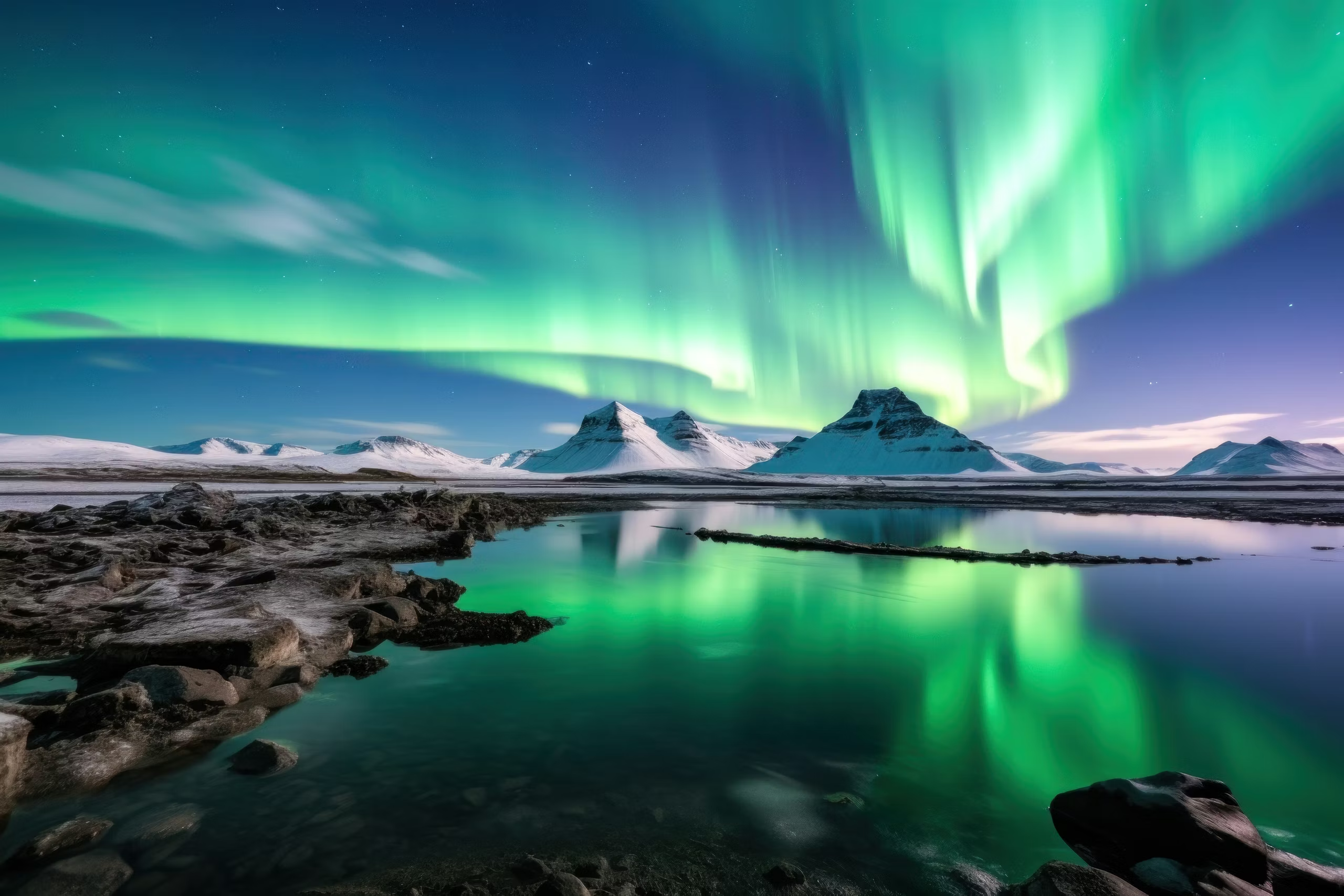
The first thing to understand about Iceland Northern Lights camping is that its a weather sport, not a poetic one. In Iceland a clear sky at midnight can feel like broken glass on your cheeks, your boots go stiff by the tent flap, and the best aurora show of the trip may happen while you’re brushing snow off a zipper with numb fingers. Travel copy loves the romance of it. The practical version is better. Here’s what actually matters.
The reality versus the postcard
Aurora camping in Iceland is not “park anywhere and look up.” The lights themselves are only half the job. The other half is darkness, cloud cover, road conditions, campsite openings, and whether you are actually warm enough to stand outside for an hour without making dumb decisions. That fantasy sells. The real trip is quieter and more technical.
The other correction: deep winter tent camping is not some standard Iceland ritual for normal travelers. Local camping guidance is blunt that winter camping is far better suited to winterized campers than tents, and honestly I agree. Luxury travelers do not get extra points for suffering. If you’re cold, wet and sleep-deprived, you make less chances for yourself because you stop chasing breaks in the cloud the second conditions turn annoying.
Snæfellsnes and the Westfjords are the two regions I’d prioritize
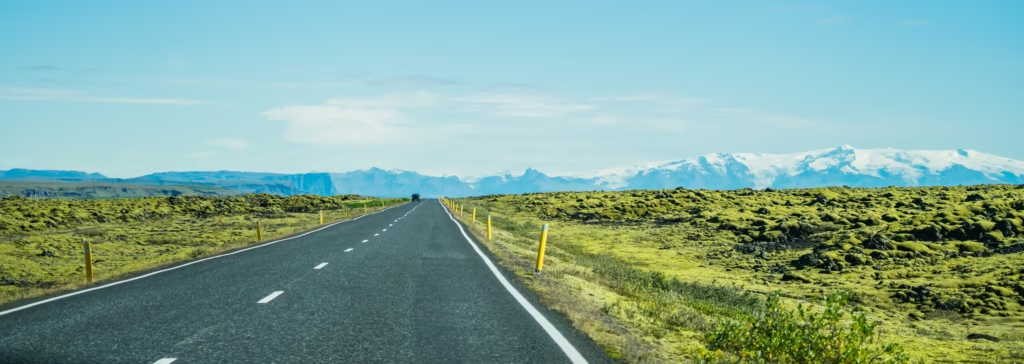
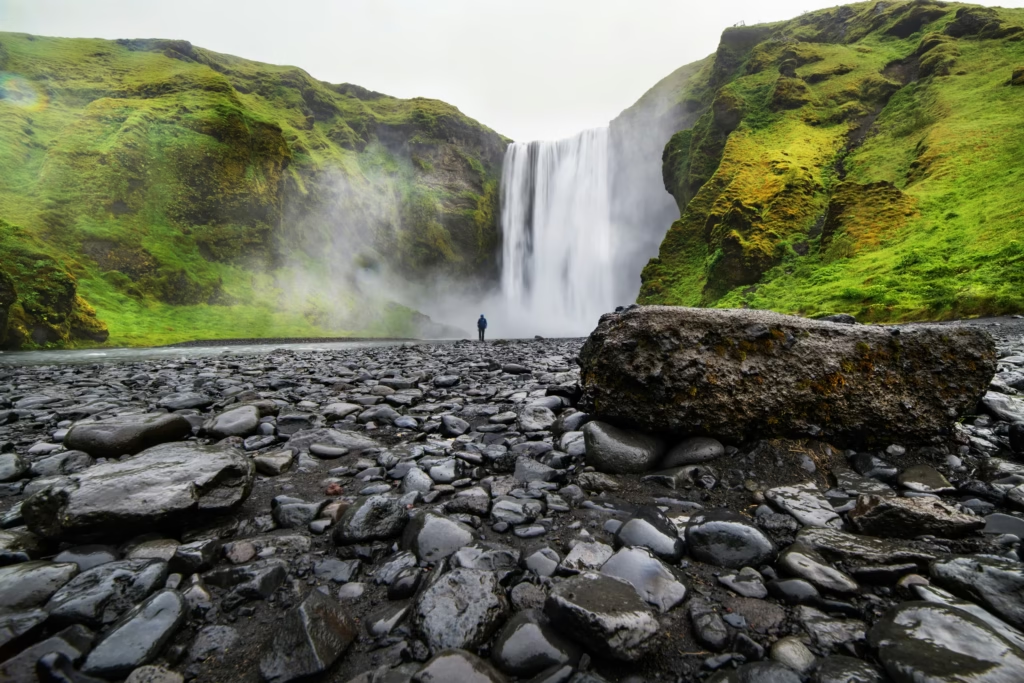
If you’re picturing one neat “best place” for aurora in Iceland, skip that idea. You want regions with dark skies, decent winter access, and enough flexibility to move when cloud maps change. Snæfellsnes works because it’s only about two hours from Reykjavík, yet still gives you sea, mountains, glaciers, lava fields and black beaches in one compact peninsula. It’s Iceland in miniature, which sounds like marketing until you actually drive it.
The Westfjords are the stronger pick for travelers who care more about darkness than convenience. Light pollution is almost nonexistent, towns are tiny, and even Ísafjörður is small enough that the aurora can be visible right from town in season. But your not camping for comfort out there — you’re camping for silence, emptiness, and the kind of sky that makes south-coast roadside pull-offs feel crowded by comparison.
The campsites I’d actually use
For a realistic first aurora-camping itinerary, I’d keep it to a few proven places rather than trying to stitch together every dramatic pin on the map. Þingvellir’s official campground is one of the safest bets because one camping area stays open year-round. In winter, services are limited, but it’s close enough to Reykjavík for a short first or last night and open enough that you can actually see the sky without a campground’s buildings blocking half of it.
On Snæfellsnes, Grundarfjörður is the practical move. You get fjord views, Kirkjufell nearby, and a year-round base with reduced winter service rather than a total shutdown. Vík is useful, it gives you options on the South Coast and minimal light pollution compared with Reykjavík, but it isn’t my favorite true winter-camping choice because the weather can feel more punishing than romantic in a hurry. For shoulder season though, its better as a flexible aurora base than people admit.
If you want East Iceland darkness without going fully remote, Höfn is smart. Aurora Cabins there are simple, not glossy, but the draw is obvious: small-town services nearby, seriously dark skies just outside town, and frequent aurora potential from September through March. For a niche trip like this, simple but well-situated beats expensive but badly placed every time.
Gear for sub-zero nights is where this trip gets won or lost
For actual winter nights in Iceland, I would not sleep in a tent unless you already know how your body handles cold camping. A proper four-season tent, serious sleeping system, insulated pad setup, and windproof outer layers are the baseline. Not the upgrade. If your gear list is soft enough to accomodate “cute” rather than warm, book a lodge and do your aurora watching from outside instead.
The part people underrate is not the sleeping bag rating. It’s the dead time. Standing still. Waiting. Looking north for forty minutes while the wind sneaks into your cuffs. Pack for that, not for the drive from Reykjavík. No romance in that.
Three things worth booking before you land
- A winterized camper or heated cabin if your trip is November through March.
- One true cold-weather outer layer system: shell, insulated midlayer, thermal base, boots, mittens and a thermos you’ll actually use.
- A backup hotel night in case storms close roads or campsites along your route.
The rules matter more in Iceland than people think
This is the part where lazy internet advice causes problems. The Environment Agency of Iceland is clear: you cannot just pull over in a campervan and stay the night wherever the view looks good. Outside organized campsites or urban areas, campervans and caravans need landowner permission, and protected areas have tighter rules still.
At Þingvellir and in other protected areas those restrictions are not theoretical. At Þingvellir winter operations are pared down. In Snæfellsjökull National Park, hikers and bikers can camp for one night only in designated areas, and larger groups or longer stays need permission. If a dreamy “wild camp under the aurora” image ever occured to you, this is your reminder that Iceland has spent the last decade trying to curb exactly that kind of improvisation. Also, the headline campsite fee is never the whole number: expect extra charges for electricity, showers and waste disposal.
When to go — and when to quit camping and book a lodge
The broad Northern Lights season runs September/October through March, as the official tourism site and Icelandair both emphasize, but I would not blindly choose the darkest dead of winter. September and March are often the sweeter months because you still get long dark windows, but road conditions and general trip quality can be less punishing than mid-winter. Solar Cycle 25 has also made 2025–2026 unusually strong for aurora chasers.
If the trip is built around comfort as much as sky, this is where Hotel Rangá and Hotel Búðir come in. Hotel Rangá is the answer, you still get the darkness, the river reflections, the wake-up calls and the observatory, but you also get hot tubs and walls. Hotel Búðir is the Snæfellsnes version of that logic — remote enough for good viewing, polished enough that your trip doesn’t turn into a cold-management exercise. Different mood.
For the Westfjords specifically, I’d target late September to early April and keep your route loose enough to obey forecasts rather than reservations. The regional tourism board is right to stress the low light pollution and smaller crowds. But weather still wins. Always.
Five Questions People Actually Ask
Can you really camp in a tent for Northern Lights in Iceland? Yes, but only if you already know cold-weather camping and have the gear to back it up. For most luxury travelers, a winterized camper or lodge-plus-night-drives setup is the saner call.
Is Snæfellsnes or the Westfjords better? Snæfellsnes is easier and faster from Reykjavík. The Westfjords give you darker skies and fewer people, but they demand more patience with roads, closures and changing weather.
What’s the best campsite near Reykjavík for aurora? Þingvellir is the practical one because it stays open year-round in limited form and is close enough for an easy first test night. It also gives you a legal, straightforward base instead of guesswork.
Do you need ETIAS for Iceland in 2026? Not yet, as of the current guidance, though late 2026 is the expected launch window. Check official Schengen guidance before you book.
Is camping really cheaper than hotels? Absolutely, but only on paper. Once you add campground fees, showers, electricity, parking, winterized vehicle rental and the occasional bailout hotel, the gap narrows faster than people expect.
Where to go next?
- Iceland raw nature — for the wider Iceland landscape pick.
- What luxury travel actually means in 2026 — for the broader framework.
- Grand Canyon and Utah — for US wilderness lodging contrast.