
Last updated: May 2026. Brazil hotel rates, festival ticketing, and entry requirements for U.S. travelers shift seasonally — confirm current details with operators directly. Check travel.state.gov before booking.
The first useful sound in Salvador isn’t samba. It’s dendê oil snapping in a pan, then a berimbau string cutting through humid air while church bells bounce off stone in Pelourinho. That mix — food, rhythm, religion, architecture, memory — is the real entry point to Brazil. After enough reporting trips, enough late-night music rooms, and enough bad hotel-concierge cultural advice, the pattern is obvious: Brazil makes more sense when you treat culture as the trip, not the filler between beach days. Here’s what actually matters. See also our Brazilian Amazon coverage (a different cultural register entirely).
The four layers that actually shape Brazilian culture
At first Brazil looks like a big, warm, easy seduction. Then you stay longer and realize it’s four layers stacked on top of each other — Indigenous, African, Portuguese colonial, and later immigrant waves from Italy, Germany, Japan and Lebanon. Those four layers are not museum labels. They show up in street food, city plans, music, family names, church façades, religious practice and the sound of Portuguese itself. Tupi, Guarani and Yanomami matter here not as decorative origin stories but as living peoples whose languages, foods, craft traditions and territorial struggles still shape the country.
The African layer is the one many American travelers feel most strongly first, especially in Bahia, where Yoruba- and Bantu-derived religious and musical traditions still sit close to the surface. Portuguese colonial power built the churches, forts and town grids. Later immigration changed the table: Japanese influence in São Paulo, German traces in the South, Italian weight in the Southeast, Lebanese presence in trade and food. All of that is Brazil. Not evenly. But enough that a good trip should move through at least two of those layers on purpose, not by accident.
Salvador and the Recôncavo: start here for African Brazil
In Salvador the density is the point. The city’s Historic Centre — Pelourinho — has been on UNESCO’s list since 1985, and the designation matters because the place still reads as a working cultural core rather than a sealed historic set. You hear capoeira in one square, smell shrimp and dendê from an acarajé stand in the next, then step into a church that makes the colonial economy feel less abstract and more physical. TripAdvisor’s 2025 Black Brazilians’ guide put it bluntly: Afro-Brazilian culture is embedded in every corner of Salvador. That matches the street.
For a luxury traveler, Salvador works best when you book context instead of pretending you’ll decode it solo. Small-group Pelourinho walks were running roughly USD 53–59 in recent 2026 listings, with private Afro-heritage city tours starting around USD 88–110. Use one. Then sleep somewhere that calms the nervous system after the sensory overload — Hotel Fasano Salvador was showing rates from about USD 272 on recent public searches. Book the guide, the hotel, and one dinner in the old center early, the city rewards structure more than improvisation.
The UNESCO cities, and which two to actually visit
Brazil has more colonial cities than most first-time visitors realize, but not all of them belong in your first 10-day cultural trip. Short version. If you have ten days and want the highest return with less flights, do Salvador plus Ouro Preto. Salvador gives you Afro-Brazilian urban force. Ouro Preto gives you the gold-rush baroque argument — steep streets, church-heavy skyline, and the sense that wealth, religion and violence were once packed into the same hillsides. Ouro Preto has held UNESCO status since 1980; Olinda since 1982; Salvador since 1985; São Luís since 1997.
Paraty is the exception I’d happily swap in if you want coast folded into the history. Its UNESCO mixed designation — culture plus biodiversity — makes it unusually good for travelers who like their colonial streets with Atlantic Forest and bay light on the edges. Pousada Literária de Paraty was showing recent rates around USD 387–441 through MICHELIN and hotel-booking partners, which is a very reasonable cultural splurge by U.S. luxury standards. Salvador, Ouro Preto and Paraty are the trio I’d build around most often. São Luís is worth it, but not usually on a first run unless Maranhão is already the plan.
Music and religion are not side entertainment here
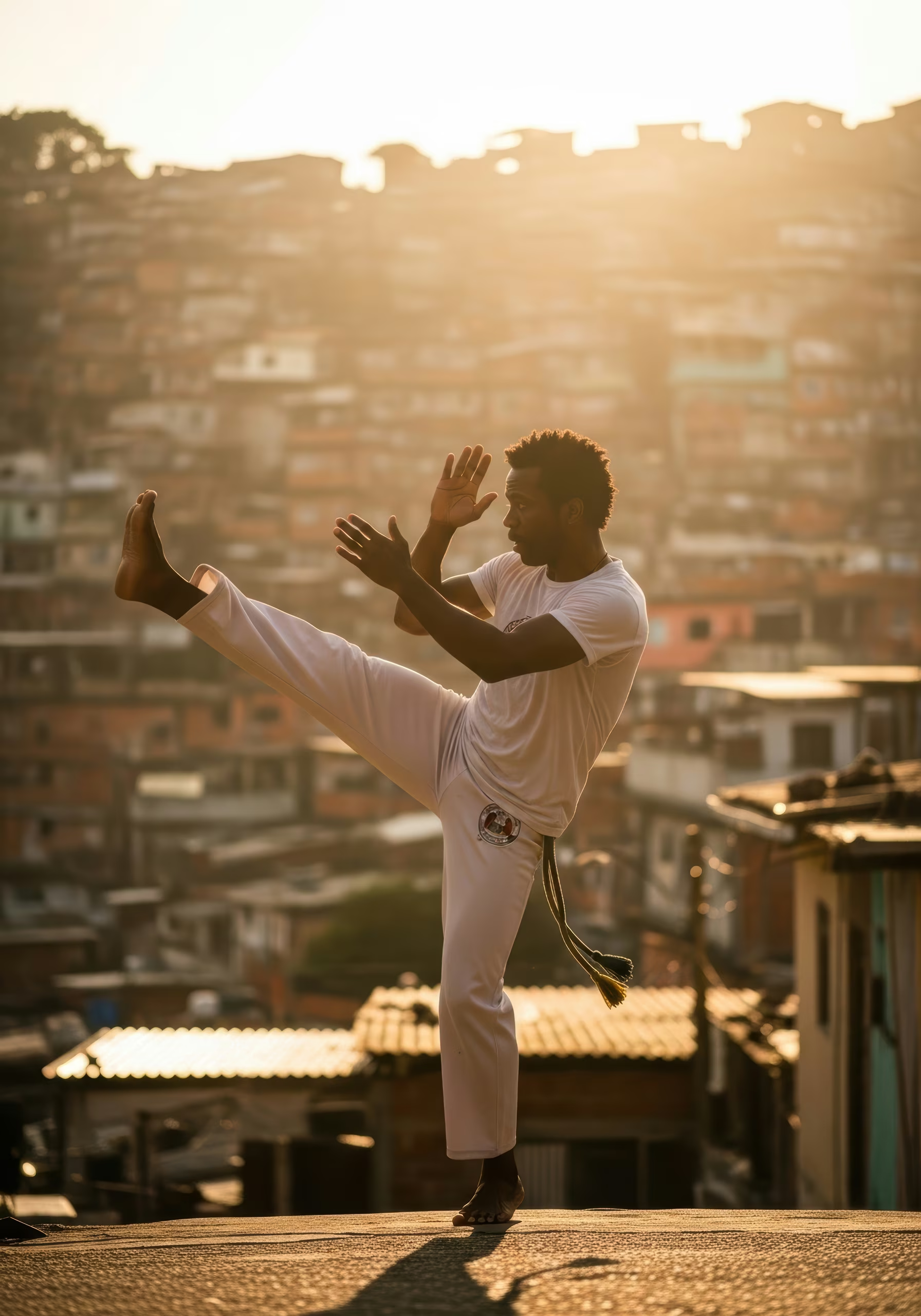
If your idea of Brazilian culture is “samba plus Carnival,” your not wrong exactly, but you are leaving a lot on the table. UNESCO’s note on Samba de Roda makes the genealogy clear: what developed in Bahia later influenced the urban samba that became one of the country’s national symbols. Capoeira got UNESCO recognition in 2014 too, and rightly so — it’s fight, dance, sport, music and coded history in one form. Maracatu Nação from Recife is now under UNESCO review after Brazil submitted the nomination in 2025, which tells you how central Pernambuco still is to the country’s musical archive.
In practice I’d split the listening map like this: samba and bossa nova in Rio, capoeira and samba de roda in Bahia, maracatu in Pernambuco, forró in the Northeast during June. Bossa nova matters more than many travelers think — the late-1950s Rio shift around “Chega de Saudade” still shapes how upscale Rio sounds at night. And religion deserves better behavior than most visitors bring. Candomblé and Umbanda are not dinner-show content. If you visit a terreiro or a related cultural site, follow dress codes, skip intrusive photography and let someone local explain the room before you start treating it like anthropology.
Amazonian indigenous heritage: do this carefully or not at all
Most American travelers say they want “indigenous Brazil,” but what they usually mean is that they want a clean, legible cultural encounter that will fit neatly into an itinerary. Brazil does not always accomodate that. Yanomami territory access, for example, is tightly regulated, especially around places like Pico da Neblina/Yaripo, and rightly so. For a first luxury cultural trip, I would not chase a vague “village visit.” I’d do Manaus only if the broader Amazon is already part of the trip, then work through reputable operators, museum contexts, indigenous-led art spaces, or structured cultural programming instead of extractive drop-ins. That is slower, less performative and usually far more honest.
How I’d thread a 10-day cultural Brazil trip in 2026
The biggest practical change for Americans is the visa. Brazil reinstated the requirement for U.S. travelers on April 10, 2025, and the e-visa is now part of the basic prep list, not a detail to handle later. The fee has been running USD 80.90, valid for 10 years, with stays up to 90 days per entry. Most trip failures I’ve seen in 2025–2026 occured before takeoff, not on the ground — people were still relying on pre-2025 assumptions. Also worth knowing: Brazil does not require yellow-fever proof for entry, but public-health authorities still recommend the vaccine for many itineraries, including some major-city routes.
Three things worth booking before you arrive
First, the visa. Second, at least one specialist guide in Salvador. Third, your intercity air segment well before the last minute — GOL’s Rio–Salvador fares have recently shown promos from about R$ 282 one-way, but average round-trips were more like R$ 681–749. Bring cards, cash and adapters. That matters. Brazil uses type-N plugs and a mixed 127V/220V system, so one sloppy hair-tool assumption can kill a device fast.
- Days 1–2: Rio de Janeiro for bossa nova context, one serious museum stop, and a night in a classic hotel. Copacabana Palace was still pricing from roughly USD 680 in recent public listings.
- Days 3–5: Salvador for Pelourinho, Afro-Brazilian history, capoeira, food markets and one private heritage guide.
- Days 6–7: Belo Horizonte gateway into Ouro Preto; sleep in Ouro Preto if you want the steep old-town mood after day-trippers leave.
- Days 8–10: Paraty for the colonial center, better hotel finish, and a softer landing before flying home.
That routing is not the cheapest version of Brazil, but it is one of the smartest for a cultural first trip. It keeps the chronology readable, the hotel standards high enough, and the emotional arc moving forward instead of sideways.
Five Questions People Actually Ask
Do I need a visa now? Yes. U.S. citizens need a Brazilian visa or e-visa before travel as of April 10, 2025, and airlines can deny boarding without it.
Is Brazil too risky for a luxury cultural trip? No, but it is not a country for sloppy logistics. The U.S. advisory is Level 2 overall, with specific areas — especially favelas and some border zones — carrying much higher risk.
Which two heritage cities should I prioritize first? Salvador and Ouro Preto. Add Paraty if you want a coastal finish and can spare the extra transfers.
Do I need the yellow-fever shot if it isn’t required? Often, yes, or at least a serious consultation about it. Brazil does not require the certificate for entry, but the recommendation map is broad enough now that its easier to discuss it early than scramble later.
Can I get by with English? If you stay in higher-end hotels and use guides in Rio, Salvador and Paraty, yes. Outside that lane, Portuguese still matters more than many Americans expect.
Where to go next?
- Brazil luxury travel guide — for the broader cluster overview and regional breakdown.
- Brazilian Amazon eco-luxury — if the rainforest is your next chapter.
- Festa Junina deep-dive — for the June Northeast festival angle.