
Last updated: May 2026. Prices, opening hours, and entry requirements shift with seasons and policy changes — confirm directly with operators or official sources before booking. U.S. travelers should check travel.state.gov for current entry requirements.
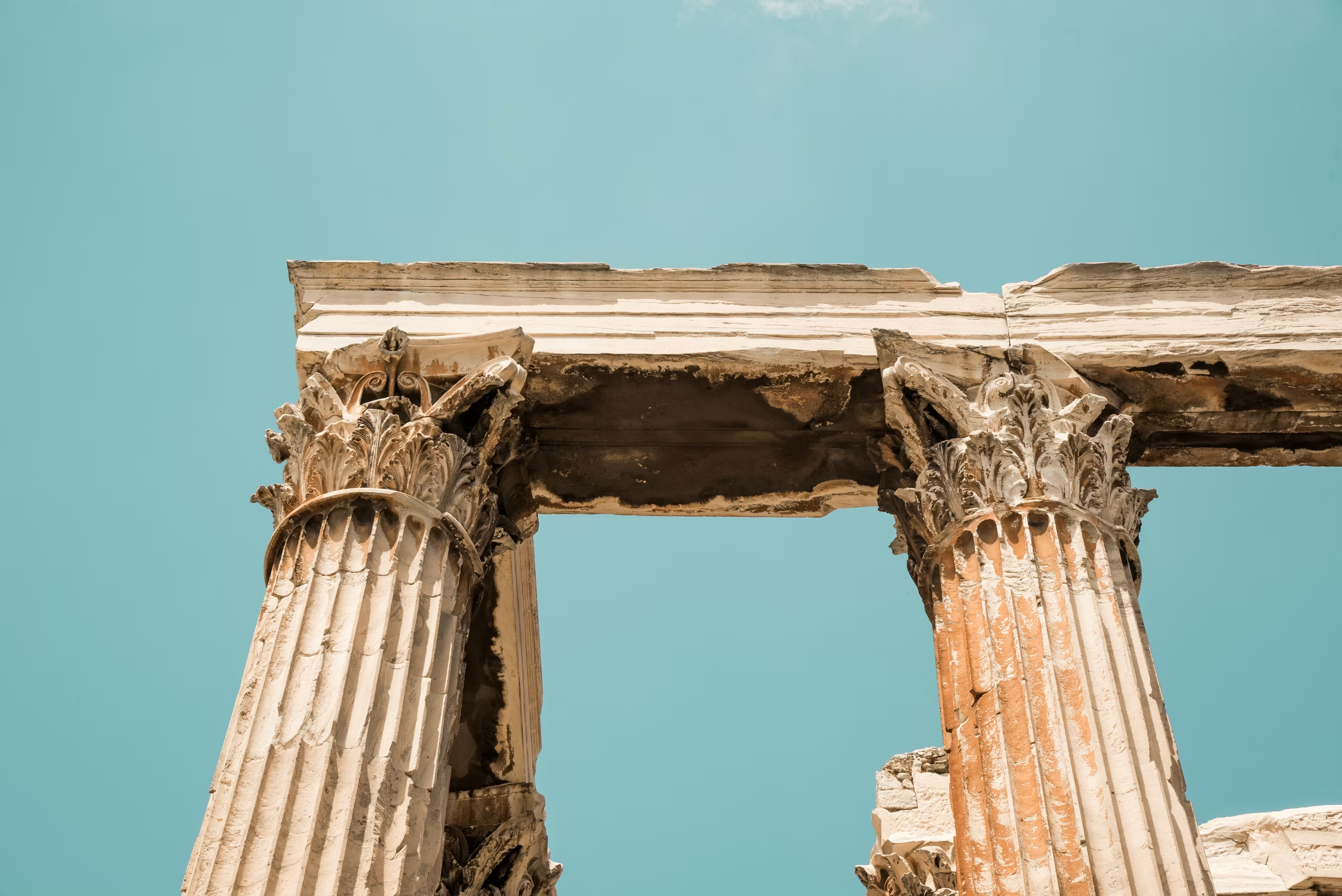
By late May the marble is already pushing heat back through your shoes, coffee cups are hitting saucers two tables over, and the Acropolis looks less like a monument than a permanent weather system hanging above the city. Athens is not the kind of place that flatters lazy planning. It can feel sloppy, brilliant, expensive, dusty and deeply fun in the same afternoon. Treated right, it’s one of Europe’s best city stays. Here’s what actually matters.
Athens works better than the brochure version
Most first drafts of Athens are wrong. They sell either ancient glory or modern nightlife, as if you’re supposed to choose. Real Athens is the overlap. You spend the morning under columns, the afternoon in air-conditioning, the early evening on a hotel terrace, and midnight in a neighborhood that still has old men in shirtsleeves arguing over football.
That mix is exactly why luxury works here. Not because the city is polished in the Swiss sense — it isn’t — but because the right hotel gives you relief from the friction while leaving you close enough to feel the street. That’s the whole game in Athens.
The official tourism site leans into Athens as Europe’s historical capital, and fair enough. But its a city that rewards planning more than romance. The travelers who love it are usually the ones who book the Acropolis correctly, stay in the right neighborhood, and leave enough room for long lunches and late rooftops instead of trying to “do Athens” in 26 frantic hours.
The Acropolis: book the slot, go early, and don’t overcomplicate it
In practice the Acropolis is simpler than people make it. The official archaeological-site ticket is €30 in 2026, it’s single-use, and timed-entry rules matter now. The old habit of vaguely showing up whenever you feel like it is over. Use the official e-ticket platform, choose a real entry window, and build the rest of your day around that instead of the other way around.
If your staying in Athens for four nights or more, I’d still do the Acropolis on the first full morning. Not because it has to come first emotionally, but because it sets the city in your head. You understand Plaka better afterward. You understand why every rooftop is priced the way it is. You also avoid the dumbest heat. From April through August, opening generally runs 08:00 to 20:00 with last entry at 19:30, but shoulder and winter periods close earlier, so check again right before you go.
The crowd strategy is not subtle. First slot or late slot. That’s it. Daily caps are now in place, and the site feels very different at 8:10 a.m. than it does at 12:40 p.m., when cruise spillover, tour groups and heat have all met on the same rock. That helps.
I would pair the Acropolis with the slopes and then stop. Do not cram the Ancient Agora, Roman Agora, museum, lunch, shopping and Sounion into the same day unless you enjoy moving through cities like you’re late for a connection at O’Hare.
Where to stay: Syntagma for convenience, Plaka for mood, Kolonaki for polish
The right base depends on whether you want to walk to everything, sleep with the Acropolis in sight, or step out into better shopping and quieter streets. For most luxury travelers, the practical shortlist is Plaka, Kolonaki, Monastiraki and Syntagma — but not all four do the same job.
Hotel Grande Bretagne remains the classic power move. Condé Nast Traveler’s Gold List praise makes sense because the place still functions as a landmark, not just a hotel. Stay here if you want old-school service, top-tier concierge muscle, easier car access, and less stairs than Plaka. It also makes late dinners and day-trip departures painless.
Athens Capital is the cleaner modern answer in Syntagma. It suits people who like crisp rooms, a central address and the feeling that everything can be handled efficiently. If you care most about walking access to shops, parliament, the metro and a short downhill drift toward the old center, it’s a very easy yes.
Plaka is where people book with their eyes. Sometimes that works. Electra Palace is still one of the safer luxury picks here because you’re buying location and rooftop payoff together, not just marketing copy. Book Plaka if your trip can accomodate a little more foot traffic, slightly more tourist energy, and the fact that every walk home looks good at night. If you want linen, service and silence before everything else, sleep elsewhere and visit Plaka on foot.
Kolonaki is the neighborhood I’d pick for repeat visitors, solo travelers with taste, or anyone who would rather do lunch at Filipou and browse Voukourestiou than wake up beside souvenir stands. It’s not as cinematic at first glance, but its more polished hour by hour.
Three things worth booking before you arrive
The Acropolis time slot. Do not leave this until the night before.
Your rooftop table. Acropolis-view bars are not impossible to get into, but the good seats disappear first. A reservation.
Your hotel category. In Athens, the upgrade is often about terrace position, soundproofing, and whether you see the hill or a shaft between buildings.
Plaka, Anafiotika, and Kolonaki are three different moods
The official city guide is right to call Plaka “The Neighbourhood of the Gods,” but it undersells the practical part: Plaka is useful. Plaka is touristy, that does not make it useless. It is still one of the nicest places in central Athens to lose an hour if you choose your street carefully and refuse the first menu thrust into your hand.
Go early. By 10 a.m. the lanes around the main souvenir pockets are already filling up, and the better version of Plaka is quieter — church bells, cats on warm stone, laundry lines, coffee, olive oil soaps and ceramics. Anafiotika is the part to handle gently. It is tiny, residential, and much better at first light or near golden hour when the white walls stop reflecting so much glare back at you.
Monastiraki is for energy. Stay there only if you like movement, rooftop bars, market spillover and some nighttime noise. The square itself is useful, the so-called flea market is more permanent retail than people expect, and the area earns its keep after dark when you want a bar within five minutes of wherever you finished dinner.
Kolonaki is the counterweight. Better dressed, calmer, more expensive in the right ways. This is where I’d send someone who already did the postcard version of Athens and now wants café tables, galleries, lunch that stretches, and boutiques that make sense for carry-on travelers.
Museums and rooftops: do one serious museum, then get above the city
The best museum hour in Athens often occurs after the Acropolis, not before it. That’s when the pieces stop feeling abstract. The Acropolis Museum official site is the one to check because hours shift by season and Friday stays open late. If your only doing one museum, make it this one. The glass, the light, the excavation underfoot, and the sightlines back toward the rock all work together.
Then do rooftops. Not six of them. One. Maybe two if your hotel has its own bar and you want a second angle. The official city guide’s rooftop roundup is actually useful here because it separates mood from view.
A for Athens has the close-up Monastiraki shot everyone wants. 360 is livelier and younger. Hotel rooftops are steadier, pricier and usually better for travelers who hate waiting in line for a cocktail they’ll forget in 20 minutes anyway. A good Athens rooftop drink now runs about €14, so budget it like New York happy hour, not neighborhood taverna money.
If I had four full days in Athens, this is the version I’d recommend. No marathon.
- Day 1: Settle in, walk Syntagma to Plaka, do a low-effort rooftop drink, sleep early.
- Day 2: First-slot Acropolis, late-morning Acropolis Museum, slow lunch, then Kolonaki for the rest of the afternoon.
- Day 3: Pick either shopping and city museums or a half-day escape to Cape Sounion.
- Day 4: Delphi if archaeology is your thing; otherwise stay in Athens and enjoy the city at a human pace.
Day trips that make sense, and a few that don’t
Delphi is worth it, but it is a full commitment. You’re looking at roughly 2.5 to 3 hours each way and you need an early start or the site feels compressed. If you have five nights in Athens and a real appetite for history, go. If you have three nights total, don’t pretend you’ll “just squeeze it in.” You won’t enjoy it.
Cape Sounion is the easier luxury answer. Less intellectual heft, more coastal release. It works especially well if you’ve done two dense city days and want sea air without the logistics of ferries or a full relocation. This is also the better choice for travelers who want a private driver day and a long lunch rather than another museum label.
What I’d skip: trying to combine Delphi and central Athens in the same day, staying somewhere “almost in Athens” to save money, or chasing every rooftop on social media. Athens improves when you let a few hours go unproductive.
When to go, what to watch, and what’s changing for Americans
For most luxury travelers, Athens is best in April, May, late September and October. That’s the sweet spot for heat, timing and shoes. You can still do rooftops without feeling roasted, and the Acropolis is much more manageable. Summer is absolutely doable, but it becomes a city of early starts, hotel shade, and late dinners.
Winter has its own appeal — lower hotel pricing, softer light, roomier museums — but it’s less of a rooftop city then. Spring can bring dusty winds, and deep summer can turn exposed terraces punishing by early evening. If you come in July or August, build your days around the sun instead of fighting it.
For Americans, the entry picture is also shifting. As of spring 2026, short tourist stays are still visa-free under the normal 90/180 Schengen rules, but ETIAS is expected later in 2026, so this is one of those trips where checking official rules right before departure is not optional.
Five Questions People Actually Ask
Is Athens worth four or five nights? Yes. Two nights is a hit-and-run, three is decent, four or five is when the city starts feeling relaxed instead of scheduled.
Plaka or Kolonaki? Plaka if you want atmosphere and easy historic-core wandering. Kolonaki if you want better shopping, calmer streets and a more polished daytime rhythm.
Do I need a guided Acropolis tour? Not always. A smart traveler with an early slot and a bit of reading can do it independently, but a good guide is worth paying for if this is your first Athens trip and you want the site to mean more than “old stones on a hill.”
Is Athens safe for luxury travelers? Broadly yes. The real issue is petty theft in crowded areas and the occasional protest disruption around Syntagma, not the sort of citywide unease some first-timers imagine.
Do Americans need ETIAS for Greece yet? Not at the moment of writing. Check again before you fly because its still visa-free for short stays now, but ETIAS is expected later in 2026.
Where to go next?
- Greece luxury travel guide for a 7-14 day Greek odyssey — for the pillar piece behind this.
- Cultural travel framework — for the three-legs rule applied to Greece.
- Rome, Italy practical luxury guide — for a Mediterranean city pair.