
Last updated: May 2026. Prices, opening hours, and entry requirements shift with seasons and policy changes — confirm directly with operators or official sources before booking. U.S. travelers should check travel.state.gov for current entry requirements.
1. Brazil is not one luxury trip
Brazil hits you in layers before it ever settles into a thesis. Salt on the air in Rio. A fast, sweet cafezinho in São Paulo that is gone in three sips. Dendê oil and shrimp in Salvador. Wet wood, river air and engine hum when you leave Manaus for the blackwater. Then birds so loud in the Pantanal that the silence between calls feels edited. That is why Brazil works so well for luxury travelers — not because it is neat, but because it isn’t.
Americans often approach Brazil as if it should behave like one big beach country with one correct first trip. It doesn’t. Brazil is a country-size portfolio: city polish, ecological drama, old colonial wealth, modernist ambition, festival obsession and a food map that changes every few hundred miles. You do not “cover” it in 10 or 14 days. You choose your Brazil carefully, and the quality of the trip rises fast once you accept that.
How do you turn a place this large into a trip that still feels elegant? When does Brazil luxury travel mean a quiet hotel in Jardins, and when does it mean a jaguar boat at dawn or a June festival in the Northeast? Those are the real questions. Not whether Brazil is worth it. That part is easy. The smarter job is choosing which version of Brazil belongs in your first 2026 itinerary. Here’s how I’d do it.
2. Brazil at a glance for 2026
Brazil is the largest country in South America and the fifth largest in the world, taking up nearly half the continent and carrying Latin America’s biggest population and economy. It is also officially divided into five macro-regions — North, Northeast, Central-West, Southeast and South — and that structure is actually useful for travel planning because the country changes so hard by region. The landscapes do. The food does. The cultural weight does. The hotel style does.
For Americans, the first adjustment is language, money and sheer scale. Portuguese is the national language. The currency is the Brazilian real, and recent six-month exchange patterns have hovered around roughly 1 USD to about 5 to 5.3 BRL for trip-planning purposes. For most Americans the trip begins with an overnight long-haul into São Paulo or Rio de Janeiro, then at least one domestic flight. Not remotely the kind of country where you land and casually “swing by” the Amazon, Bahia, and the Pantanal in a week.
By 2026 Brazil is also operating from a very different tourism position than it was a few years ago. The country recorded about 9.29 million foreign arrivals in 2025 — a record year — and tourism officials have openly said they expect more than 10 million in 2026. That matters for room availability, internal flights and festival pricing, especially in Rio, Salvador and the nature hot spots during prime months. The best properties and the smartest guides will not wait for your indecision.
There is one practical change Americans absolutely cannot miss: the visa exemption ended in April 2025, and U.S. passport holders now need an e-visa or visitor visa before arrival. No visa on arrival. No improvising at the airport. And because yellow fever guidance has also widened beyond the old Amazon-only mental map, Brazil in 2026 is the kind of trip where paperwork matters more than travelers expect. The official tourism board at Visit Brasil is a good starting point for inspiration, but the trip gets real once you pair that inspiration with the visa rules from Brazil’s Ministry of Foreign Affairs. your not going to finesse this country with vibes alone. That alone.
3. The Five Brazils
North. This is the Brazil that rewires scale. The North covers nearly half the country and is dominated by the Amazon, so luxury here is not marble-lobby luxury first. It is access luxury. You fly into Manaus, then move onward by riverboat or lodge transfer, and the trip becomes about blackwater channels, flooded forest, pink dolphins, birds, and a pace that pulls you away from city logic. If this is the Brazil you want, start with our deeper Brazilian Amazon guide. In practice the smartest first Amazon trip is usually Manaus plus Anavilhanas, not Manaus itself. Not Manaus itself.
Northeast. If you want Brazil with stronger color, older ritual, deep festival life and the most emotionally direct food in the country, this is usually where I’d send you. Bahia is the headline because Salvador gives you Afro-Brazilian history, capoeira, Candomblé traces, sea light and dishes that taste of palm oil, seafood and heat. Pernambuco pulls you toward Recife and Olinda, and Maranhão turns the calendar toward Bumba Meu Boi and the dune-lagoon drama of Lençóis Maranhenses. If you want beaches here, understand they are not all interchangeable resort strips. Bahia feels different from Pernambuco, and both feel different from the more wellness-driven corners of the country.
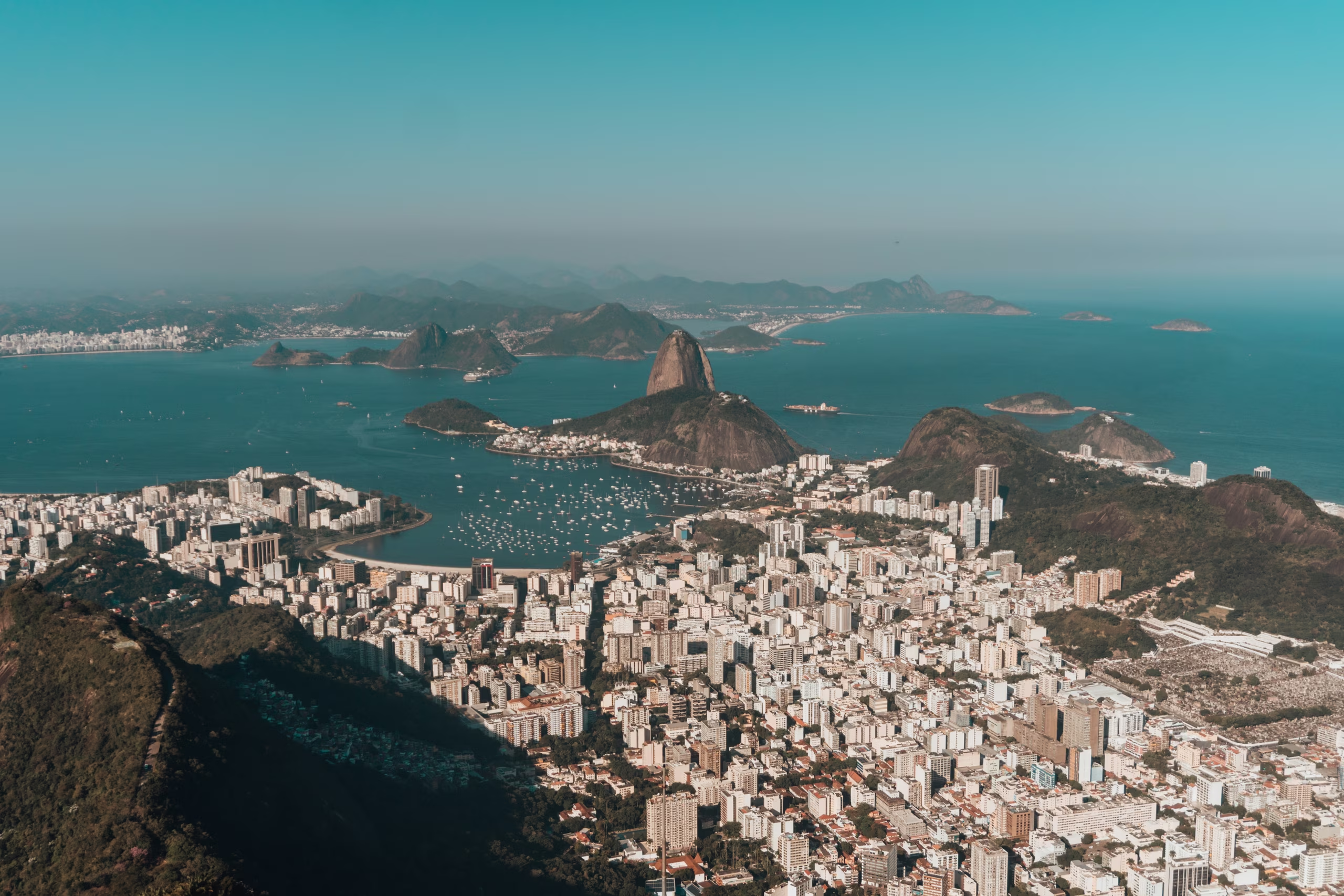
Southeast. This is the region most first-time American luxury travelers actually book, even when they think they are booking “Brazil.” Rio de Janeiro gives you beach life, mountain backdrop, music and the country’s most cinematic urban layout. São Paulo gives you money, galleries, design, Japanese and Italian influence, and the country’s strongest serious-dining scene. Minas Gerais changes the tempo again with colonial towns, baroque churches, and food that reads as comfort until you realize how much technique sits inside it. This is also Atlantic Forest country, so even the city-heavy version of Brazil is greener and biologically denser than people assume. Not one mood.
Central-West. For wildlife travelers, this is the sharpest surprise. The Pantanal is the destination people should be talking about when they say “I want to see animals in Brazil,” because this is where jaguar odds become real rather than theoretical. The luxury product here is usually lodge-based and highly structured: dawn boat safaris, dry-season drives, expert naturalists, and long quiet stretches where every movement in the reeds matters. The Cerrado, meanwhile, is the country’s great underdiscussed biome — highland savanna, red earth, weird fruit, big skies. Its the closest Brazil comes to a safari logic, but with capybaras, giant otters, macaws, jaguars, giant anteaters and caiman instead of East African analogies.
South. The South gets less international attention than it deserves on a first scan, but it becomes useful fast once you think beyond Rio and the Northeast. Iguaçu Falls is the anchor — big, wet, loud, and well worth two nights instead of a rushed in-and-out. Florianópolis enters the conversation if you want beaches with a cleaner, slightly cooler South-Brazil rhythm, and the region overall tends to read as more orderly to American travelers. Meanwhile it’s also the part of Brazil where climate and culture tilt a little differently, with stronger European immigrant influence and a generally subtropical feel compared with the north. less travelers start here, but plenty of repeat Brazil people end up circling back. Still useful.
If you only remember one thing from this section, make it this: the best first Brazil trip is usually one city region, one cultural region, and one nature region. Not five flight segments just because the map says you can.
4. Cultural and heritage depth, not just scenery
At the center of all of this sits a country built from Indigenous foundations, African displacement and resistance, Portuguese colonial power, and later immigrant waves from Italy, Germany, Japan and the Middle East. You feel those layers differently depending on where you are. In Salvador, the African inheritance stands closer to the surface — in religion, percussion, language rhythms, market food and body memory. In São Paulo, immigration rewrote the dining scene and the city’s very face. In Minas, church interiors and gold-era towns still tell a story of extraction, devotion, and class.
That is why I do not think Brazil should be sold to Americans only as “Rio plus a beach hotel.” The country’s best luxury version often comes from moving between sensory registers: samba in Rio, capoeira in Salvador, modernist emptiness in Brasília, baroque density in Ouro Preto, and then a dinner in São Paulo that quietly reveals how much Japanese, Italian and Brazilian technique have fused over the last century. Not decorative.
Music is part of this argument too. Samba is not the same thing as bossa nova, and neither one explains Bahia by itself. Candomblé is not folklore wallpaper, and capoeira makes more sense when you see it as discipline, improvisation and coded history rather than a hotel-courtyard performance. In Salvador, especially, the country’s deepest rhythm is easier to feel when you leave room for a museum, a church, a drum rehearsal, and a meal in the same day.
Brazil also has 24 UNESCO World Heritage properties, which is a useful corrective if you think the country is mostly beaches and biodiversity. Brasília, Salvador, Ouro Preto, Olinda and São Luís all sit inside that heritage logic, and so do major natural sites like Iguaçu and Atlantic Forest reserves. If you want the fuller argument for why those layers matter, our Brazil cultural heritage piece goes deeper. It also gives the festivals more context, because Carnival is not the only date on this calendar. June belongs to Festa Junina, late June 2026 belongs to Parintins, and February 13–17, 2026 belong to Rio Carnival. Much older than the hotel brochure.
If you are the kind of traveler who gets bored when a destination stays only pretty, Brazil is the country in this part of the world that keeps opening side doors.
5. What to eat, state by state, if food decides your route
In Bahia the food does not enter the table quietly. Moqueca comes in hot and fragrant, full of fish, coconut milk, dendê and peppers, with a color that reads almost copper in the bowl. Acarajé hits harder: bean fritter, shrimp, heat, crunch, that unmistakable palm-oil smell in the air. Vatapá and caruru make the point even more clearly — Bahia is one of the places where you taste Africa, Indigenous ingredients, Catholic feast days, street rhythm and port-city appetite in the same meal. Not subtle.
Minas Gerais is a different pleasure entirely. Pão de queijo is the cliché, yes, but it becomes a cliché because it earns it: hot, chewy, salty, slightly elastic in the middle when it’s done right. Minas is the Brazil of cheese bread, long lunches, sweets, coffee, and food that looks humble until you realize everyone around you is discussing it with borderline religious seriousness. That makes sense. Minas cooking has its own gravity.
In the Amazon, the flavors lean stranger for first-timers and I mean that as praise. Tacacá brings jambu’s mouth-tingling effect, tucupi’s sour edge, and a broth profile that does not taste like any other part of the country. Maniçoba and pato no tucupi read even more regional. Açaí changes here too. In Amazonian contexts it is often served unsweetened and treated more like a savory staple than an Instagram bowl. That surprises Americans, and it should.
In the Center-West, especially around the Cerrado and Pantanal orbit, you start seeing pequi, freshwater fish stews and ranch-table food that feels built for heat, long distances and river life. In the South and parts of the Southeast, the mood shifts again toward grills, picanha, smoke and salt. Not every steakhouse is worth your time, but when the cut is right, your getting one of the country’s most direct pleasures: meat, fire, beer, maybe cassava on the side, nothing overexplained.
And then the caipirinha. It is still the national shorthand for a reason, but it also tells you something important about Brazil: simple things are rarely actually simple here. Cachaça, lime, sugar, ice — that’s the baseline. Then the fruit changes by region, the sweetness shifts by bar, and suddenly you are drinking versions with passion fruit, cashew, seriguela or tangerine that would feel gimmicky anywhere else and completely logical here.
If you want to cook one classic at home before you go, start with moqueca or pão de queijo on Panelinha’s Brazilian recipe archive. It will not replace eating in Brazil. It will make you much more dangerous when you read a menu.
6. Neighborhoods and hotel bases that actually work
If you only stay in Copacabana because you think “that’s where Americans go,” you are choosing the loudest shorthand, not the best fit. Rio works better when the neighborhood matches your actual habits. Copacabana is useful if you want history, hotel scale, easy beach access and more price flexibility. Ipanema is better for first-timers who want cleaner aesthetics, better-looking daily life and easier restaurant rhythm. Leblon is the polished version of that — quieter streets, stronger residential feel, heavier wallets. Santa Teresa is for travelers who want hillside atmosphere and design-forward hotels more than sand underfoot. Not wrong exactly.
For hotel tiers in Rio, Copacabana Palace remains the grande-dame answer and public rates were starting around $659 per night when I last checked in May 2026. Fasano Rio in Ipanema was pricing from about $528, and that is the address I’d choose when I want sharp design and the best beach-positioning ratio. Emiliano Rio in Copacabana was starting around $308 on public searches in May 2026, which makes it one of the more interesting ways to buy high-end Rio without paying Belmond numbers. its still about the beach strip, but the mood is leaner.
In São Paulo, the answer is usually Jardins unless you have a very specific reason to do otherwise. It is safer by city standards, more useful for luxury hotels, better for shopping, and strong for restaurants. Vila Madalena is fun, yes, but I would visit it rather than sleep there on a first luxury trip. São Paulo rewards a base near the action you actually booked: power breakfasts, galleries and serious dinners. That’s deliberate, not boring.
Hotel-wise, Rosewood São Paulo was showing rates from about $556 per night on recent public searches, while Hotel Fasano São Paulo was showing best-found nights from roughly $565 with average deals around $837 when last updated in spring 2026. If I wanted contemporary glamour, I’d take Rosewood. If I wanted classic São Paulo discretion, I’d take Fasano. Both work. They just flatter different personalities.
In Salvador, the split is simpler. Pelourinho is the cultural center you want to visit hard in daylight and for planned evening events, but Barra is easier if you want sea light, cleaner logistics and less edge after dark. Rio Vermelho is where I’d send travelers who care about food and nightlife more than postcard colonial views. In Salvador luxury still needs to accomodate the city you are actually in, which means planned car rides at night and no sentimental wandering after dinner.
For hotels there, Fasano Salvador was starting around $272 a night on recent May 2026 searches, while Fera Palace was starting around $177 with average deals around $410 depending on date. Fasano is the more polished choice if you want old-city formality. Fera Palace is the one I’d pick for travelers who want design, history, sea light and easier logistics in one frame.
7. Practical guide: visas, flights, money, safety, and the first itinerary I’d actually book
As of 2026 Americans need a visa or e-visa before traveling to Brazil, and the official channel matters because there is no visa on arrival. Apply through the official VFS e-visa portal after checking the rules on Brazil’s MFA guidance. On the health side, do not rely on an outdated “I’m only going to Rio” assumption. The CDC Yellow Book now recommends yellow fever vaccination for travelers to most Brazilian states, including Rio de Janeiro, São Paulo and Iguaçu Falls, and 2025 outbreak data from WHO showed that the issue had clearly moved beyond the old Amazon-only stereotype.
Domestic flights are what make or break a Brazil itinerary. GOL, LATAM and Azul dominate the practical map, and for a 10-to-14-day luxury trip you should assume at least one connection and probably two if you combine city, coast and wildlife. Brazil is not the country to over-romanticize land travel on a first trip, it is the country to respect flight time, transfer time and the fact that one late sector can knock half a day off a nature stay. Not a road-trip country for first timers.
- 10 days: Rio (4 nights) + Salvador (3 nights) + Pantanal or Amazon (3 nights).
- 12 days: Rio (4) + Salvador (3) + Pantanal (3) + São Paulo (2).
- 14 days: Rio (4) + Salvador (3) + Pantanal or Amazon (4) + São Paulo or Minas Gerais (3).
- If Carnival is the point: cut everything else back and build the trip around Rio, with maybe one recovery stop afterward.
For money, assume most urban restaurants and hotels will take cards and contactless payments, but keep some BRL for tips, drivers and the kinds of small interruptions that still appear outside the biggest cities. ATMs are normal, but use them inside banks, malls or airports rather than on the street. The real has strengthened off late-2024 lows, so Brazil feels pricier in dollar terms than it did when Americans were getting spoiled by the exchange rate. its usually still good value against New York or London, just not a bargain fantasy.
Tipping is easier than Americans expect. A 10 percent service charge is commonly added to restaurant bills, so extra tipping is optional rather than required. Hotel staff can be tipped individually when service is notably good. Water-wise, stick to bottled or reliably filtered water. Electricity is a mix of 127V and 220V depending on where you are, so a universal adapter and dual-voltage gear save headaches.
Safety is where people either flatten Brazil into a panic story or get too casual. The U.S. advisory is Level 2: exercise increased caution, with crime and kidnapping listed as key risks. That is serious, but it does not mean the country is unusable for luxury travelers. It means city behavior matters. In Rio the South Zone — Ipanema, Leblon and parts of Copacabana — reads very differently from riskier corridors and peripheral neighborhoods. In São Paulo, Jardins is the obvious luxury base partly because it is one of the easier neighborhoods to manage. In Salvador, Barra and daytime Pelourinho are workable, while late-night wandering gets dumb fast. Much easier to stay elegant when you use rideshare, hotel cars or pre-booked drivers instead of improvising on buses or deserted streets.
If you want one practical sentence to remember, here it is: Brazil rewards people who plan neighborhoods, not just cities.
8. Questions people actually ask before booking Brazil
How many days do I need for a first Brazil trip?
Ten days is the minimum where Brazil starts to feel intentional rather than frantic. Fourteen is much better. With either version, I would still choose two cities plus one nature region instead of trying to impersonate a continent collector.
Is Rio safe for Americans in 2026?
Rio is manageable, not carefree. The South Zone works very differently from the parts of the city that dominate scary headlines, and most luxury travelers who stay in Ipanema, Leblon or carefully chosen parts of Copacabana and use rideshare or hotel transport will find the city readable. Petty theft is still real, especially on beaches and in nightlife areas, so do not dress like you are auditioning for loss.
What is the best month to visit Brazil?
There isn’t one. July to October is strong for Pantanal wildlife. December to March can be excellent for the Northeast coast and summer festival energy. Rio and São Paulo are often more comfortable outside the hottest part of January and February, unless Carnival is the reason you’re going.
Carnival or Festa Junina for a first culture-heavy trip?
If you want scale, adrenaline and international cachet, choose Carnival. If you want something more regional, more rooted and frankly easier to emotionally absorb on your first Brazil trip, choose Festa Junina. The country looks different in June — more local, more theatrical, more grounded in seasonal ritual. Not even close.
Beach first or Amazon first?
Beach first if jet lag makes you stupid and you need two easy days to land. Amazon first if the forest is the emotional center of the trip and you want to spend your highest-energy days there. I usually prefer city or beach first, then the Amazon or Pantanal once the body clock has stopped arguing.
Do I really need the yellow fever vaccine?
You need to discuss it seriously with a travel-medicine provider, yes. Brazil’s 2025 outbreak pattern and the CDC guidance both widened the practical map far beyond what many travelers still think. If Rio, São Paulo, Iguaçu, the Amazon or interior states are anywhere on your list, do not wing this.
What is the currency situation on the ground?
Cards are widely accepted in big cities, and that is how most luxury travelers will pay for most things. Keep a modest amount of BRL cash for tips, beach kiosks, drivers and the occasional small purchase. Decline dynamic currency conversion when a machine offers to charge your card in dollars — its smarter to pay in BRL.
Can I do Brazil comfortably if I don’t speak Portuguese?
Yes, especially at luxury hotels, higher-end restaurants and guided experiences in Rio, São Paulo and much of the main tourist circuit. But Brazil gets easier and warmer if you learn a few basics. Even small Portuguese efforts can change the temperature of an interaction fast.
9. The Brazil I would build first
At the end the Brazil I’d build for most American luxury travelers in 2026 is not the maximalist fantasy. It is Rio for four nights, Salvador for three, one nature region for four, and then a final urban exhale in São Paulo if you have the time. That mix gives you sea, history, food, rhythm, one great hotel city and one truly non-urban Brazil. It also gives you contrast, which is what the country does best.
If you try to do too much, Brazil can feel like airports and packing cubes. If you choose one cultural region, one city axis and one ecological zone, the country starts to read properly. Coffee in the morning. Beach at the right hour. Museum or market in late afternoon. A flight that actually earns its landing. That’s the Brazil I’d start with.
Where to go next?
- Brazilian Amazon eco-luxury — for Manaus, Anavilhanas, lodge picks and river-season tradeoffs.
- Festa Junina in Brazil — if June travel and Northeast festival culture are pulling harder than Carnival.
- Parintins Folklore Festival — for the Amazon’s loudest and most theatrical late-June rivalry.
- Rio Carnival — for Sambadrome seats, blocos and how to survive February with style.