
Pricing, regulations, and entry requirements may change — confirm current details with operators directly. Check travel.state.gov before booking international travel.
After 30+ countries I no longer believe travel automatically makes anyone happier. Not a cure. Not a personality transplant. Not a shortcut around grief, burnout, boredom, or a life you keep avoiding. But I do think the right trip can change the texture of a year. The science backs a quieter version of that: anticipation helps, experience spikes, memory lingers, then happiness fades unless the trip gave you something deeper than novelty.
Does travel actually make you happier? The honest answer
Yes, travel can make you happier. Temporarily, reliably, and sometimes deeply. No, it does not keep you happy by itself. That distinction matters because the luxury travel industry is very good at selling “transformation” when what it often delivers is a beautiful interruption.
A 2020 longitudinal study of 225 tourists in Korea found that life satisfaction and positive affect rose before travel and lasted for about a month afterward before declining, which is a cleaner version of what most of us already know: the trip glow fades. The study framed this through hedonic adaptation — the human habit of returning toward baseline after good events. Travel helps, then ordinary life starts pulling on the hem again, according to the Tourism Management study on travel and happiness.
That does not make travel frivolous. A dinner can end and still matter. A song can last three minutes and still rewire an afternoon. A trip can fade and still leave evidence. The mistake is expecting travel to carry the emotional load of a life that needs rest, friendship, therapy, less work, better health care, or different choices at home.

In luxury travel this gets slippery because money can buy less friction. The private transfer. The room ready early. The guide who knows when to stop talking. The table by the window. Low friction matters. It can create conditions for happiness. But it is not happiness itself. A $1,200 room can still hold two people who are angry, lonely, distracted, or bored.
Travel is best understood as a mood amplifier. If you are curious, it gives you more to notice. If you are exhausted, it may give you enough distance to breathe. If you are in love, it adds texture. If you are avoiding a decision, it gives the decision a better view. Its not magic. It is context.
The research gets more interesting when it separates pleasure from meaning. A 2023 Journal of Travel Research paper comparing travel experiences with possessions found that tourism experiences can cultivate eudaimonia — purpose-oriented well-being — more effectively than material purchases, even when travelers are not explicitly chasing self-discovery. The richer claim is not “travel beats stuff.” It is that travel can create meaning when it makes you participate, not merely consume. See the Journal of Travel Research record.
That is the line I care about now. Did the trip entertain me, or did it engage me? Did it give me pleasure, or did it also give me a story I still want to live inside? The first is lovely. The second lasts longer.
Anticipation, experience, memory — the three phases of trip joy
The happiest part of travel is often not the trip. Annoying, but true. Anticipation does an enormous amount of emotional work. It gives the future a shape. It lets you picture somewhere else while still sitting under fluorescent office light with coffee gone cold.
A U.S. Travel Association report on planning and happiness found that 97% of survey respondents said having a trip planned made them happier, and 71% said they felt more energy knowing a trip was coming in the next six months. That is not the same as peer-reviewed clinical psychology, but it is still useful because it captures the emotional economics of booking: the trip starts paying out before departure. The report is available from the U.S. Travel Association planning study.
I think of travel joy in three phases: anticipation, experience and memory. Anticipation is clean because reality has not arrived yet. Experience is messy because the bed is too soft, the museum is closed, the driver is late, the air smells like rain and diesel, and someone is hungry at the wrong moment. Memory edits. It cuts the airport delay, keeps the dinner, sharpens the light, softens the argument.
This is why planning matters but overplanning can ruin the thing it is trying to protect. Less unknowns can reduce stress. Fewer blank spaces can reduce discovery. The trick is building enough structure that you are not bleeding energy on logistics, and enough openness that the trip can surprise you.
The anticipation phase should include pleasure, not just admin. I like one beautiful reservation, one reading list item, one map session, one hotel photograph saved to my phone, and one thing I refuse to research because I want to meet it fresh. That mix keeps planning from becoming a second job.
The experience phase should be protected from efficiency addiction. Luxury travelers are especially vulnerable to the temptation to maximize: best table, best spa, best guide, best room, best route. The best day of a trip is often not the most optimized one. It is the day with enough slack for something human to happen.
Memory is where trips become durable. A trip that was only pleasant can blur within weeks. A trip with one emotionally specific moment — a meal with a stranger, a difficult hike, a morning swim, a market smell, a conversation with a guide, a private grief carried somewhere beautiful — can stay bright for years. The memory does not need constant joy. It needs contour.
Why some trips fail to deliver — and what they have in common

When a trip fails it usually fails before the plane lands. Not always. Weather happens. Illness happens. Lost bags, bad hotels, missed trains, family tension, strikes, credit card declines, one terrible restaurant that becomes too symbolic. But many bad trips share a structure: too much movement, too little rest, unclear purpose, and a fantasy the destination never agreed to fulfill.
The “Road to Happiness” travel study often cited by the industry found that happy trips were associated with low stress, advance planning, local-guide involvement, and distance from home. On worst trips, respondents cited stress, wasted logistics, unfamiliarity, and transportation hassles as major factors. The obvious lesson is not glamorous: logistics shape mood.
Luxury travelers underestimate this because we assume money solves logistics. It solves some. It can smooth airport arrivals, reduce lines, improve sleep, and buy expertise. But money can also add complexity: more transfers, more rooms, more reservations, more pressure to enjoy every expensive thing. The itinerary starts breathing down your neck.
I have had expensive days that felt like errands in a better outfit. Car to tasting. Tasting to lunch. Lunch to site. Site to spa. Spa to dinner. All good on paper, none of it alive. The day had no slack, it had no room to look sideways. That is a specific kind of luxury failure.
Trips also fail when they are asked to fix the wrong problem. A weekend away will not repair a relationship that needs honesty. A wellness retreat will not solve a job you hate. A solo trip will not automatically make you brave. A hotel balcony will not perform emotional labor for you. Travel can create conditions. It cannot do the whole job.
Another failure: copying someone else’s happiness. The Amalfi Coast may be perfect for a friend who loves heat, boats, late dinners and visible glamour. It may be wrong for someone who needs quiet, shade, long walks, and early sleep. Your version of happy has a climate, a pace, a noise tolerance, a food rhythm, and a preferred amount of social contact. Ignore that and the destination will not save you.
Bad trips often contain one of these patterns:
- Too many hotel changes for the number of nights.
- Travel days that pretend not to be travel days.
- No real free time before dinner.
- A trip chosen for status rather than appetite.
- A weekend used as a band-aid for a structural life problem.
- Luxury upgrades that add pressure instead of ease.
- No memorable final-day moment.
Notice what is not on that list: the destination being insufficiently beautiful. Beauty is rarely the issue. The issue is whether the trip gives you enough room to receive it.
Novel vs deep — the framework for picking your next trip

At first most of us chase novelty. New country, new hotel, new passport stamp, new story. Novelty is real pleasure. The brain likes contrast. The first morning in a place you do not yet understand has a bright edge: the elevator smell, the different siren, the pastry you cannot pronounce, the awkward ATM moment, the light switch that appears to be a puzzle designed by a bitter architect.
But novelty has a short fuse. It burns fast. Deep travel burns slower. By “deep” I do not mean worthy or obscure. I mean trips that let you build relationship with a place: return visits, longer stays, one region instead of five, a guide you spend real time with, a class, a repeated café, a local walk done twice, a language phrase you use badly and then better.
The 2025 Journal of Travel Research conceptual work on happy travel experiences separates hedonic pleasure, eudaimonic meaning, and engagement, then develops a model around freedom, achievement, social connection, and serendipity. The part that matters most to me is engagement. Trips become happier when you are not merely watching them happen. The study is summarized through the happy travel experiences research.
The novel trip asks: where have I not been? The deep trip asks: where could I pay better attention? Both are valid. I still love a first arrival. I still love the tiny thrill of realizing I do not know how the buses work. But after enough countries, I respect depth more than novelty. Depth gives memory somewhere to root.
A novel trip is good when you are stale, curious, restless, or ready for sensory reset. A deep trip is better when you want durable happiness. It lets you move past postcard recognition into pattern: how breakfast works, when streets wake up, which corners locals avoid, what the market smells like after rain, how the hotel staff’s tone changes after they recognize you. That is where memory thickens.
The luxury version of this is counterintuitive. Instead of adding more cities, buy more time. Instead of three countries, choose one region. Instead of another hotel tier, choose a better guide. Instead of a private transfer every day, leave enough space to walk. Spend to reduce friction, not to remove all texture. The best trips still have edges.
This is also why some of my favorite travel writing for yoyafun.net returns to place rather than chasing scale. The point of a trip like the Amazon eco-luxury guide is not that rainforest travel is “impressive.” It is that the destination asks for a different tempo, and that tempo changes what you remember.
Pick novel when you need aliveness. Pick deep when you need meaning. Pick neither when what you really need is sleep and a cleaner calendar at home.
When a weekend getaway works — and when it does not
Weekend getaways are overpraised and underrated at the same time. They are overpraised when marketed as self-discovery in 48 hours with a hot tub. They are underrated when used correctly: as a short, clean interruption that gives the nervous system a new setting without pretending to rebuild your life.
A weekend works when the logistics are light. Two hours by train. A short flight with no connection. One hotel. One real meal. One walk. No frantic sightseeing. No “while we are there we should also..” sickness. The emotional benefit comes from compression, not ambition.
A weekend fails when it becomes travel theater. Friday airport after work, delayed flight, late arrival, bad sleep, Saturday overbooked, Sunday checkout anxiety, Monday exhaustion. That is not a getaway. That is a scheduling crime with room service.
The hidden time cost is brutal. A three-night city break advertised as restorative can lose 8 to 12 hours to packing, airport transfers, security, delayed check-in, ground transport, and unpacking. If the total trip is 48 hours, that matters. Its the difference between a mood shift and a logistics sandwich.
For a weekend, I use a harsher test than I use for a longer trip. Can I arrive before dinner without feeling punished? Can I stay in one place? Can I avoid a car rental? Can I walk to something good? Can the hotel itself hold the weekend if weather turns bad? If no, I usually do not go.
A weekend can help with stress. It can help a couple talk differently. It can help a solo traveler remember she is allowed to have a Saturday that does not involve errands. It can help you mark a transition: birthday, job change, end of a hard month, beginning of something. But it is not enough for deep recovery if your normal life is actively draining you.
Weekend self-discovery is mostly a marketing phrase. Weekend clarity is possible. There is a difference. Clarity might arrive on a quiet hotel balcony at 7:10 a.m. with bad coffee and the sound of delivery trucks below. It might be one sentence in a notebook. It might be realizing you do not want to go back to the exact same rhythm. That is useful. But it is not a miracle.
The kinds of trips that create durable positive memory
For me durable travel memory usually comes from five ingredients: emotional contrast, agency, mild effort, social texture, and a strong ending. Not luxury by itself. Not distance by itself. Not a famous view by itself.
Emotional contrast means the trip gives you a feeling that differs from home. If your normal life is noise, the trip needs quiet. If your normal life is sameness, the trip needs novelty. If your normal life is decision fatigue, the trip needs care. If your normal life is too controlled, the trip needs unplanned space. Happiness comes partly from contrast, but the contrast has to match the hunger.
Agency matters because people remember what they choose. A rigid itinerary can be luxurious and still emotionally thin. Give me one day where I decide the rhythm. One afternoon to abandon the plan. One dinner I found myself. One walk that did not exist on the itinerary. The brain keeps those moments because they feel owned.
Mild effort is underrated. The view after a small climb. The language phrase you practiced. The market you reached without a car. The swim before breakfast. The museum wing you almost skipped. Effort gives memory texture. Too much effort becomes stress, but none at all can make a trip feel strangely weightless.
Social texture does not mean constant company. It means human contact with some specificity: a guide who tells the truth, a bartender who explains a local drink, a hotel staff member who remembers your tea, a market seller who laughs at your pronunciation, a dinner conversation that drifts beyond where are you from. These are the moments that keep a trip from becoming a beautiful slideshow.
The strong ending is the one many people miss. Psychologists and travel brands talk about memory-shaping rhythms for a reason: the final 24 hours can disproportionately color the trip. Do not end with a frantic transfer if you can avoid it. End with the dinner, the walk, the view, the slow breakfast. Give memory a handle.
I like one high-point in the last day: a sunset dinner, a private garden visit, a favorite restaurant repeated, a ferry ride, one last swim, a quiet drive, a final guided walk with someone good. Not the biggest thing. The right thing.
Durable memory also loves repetition. Returning to the same café for three mornings does more than one spectacular breakfast in a room full of strangers. Repetition creates belonging, even temporary belonging. Luxury travel often underrates this because it wants constant novelty. But memory likes patterns. The second time the server recognizes you, the place changes.
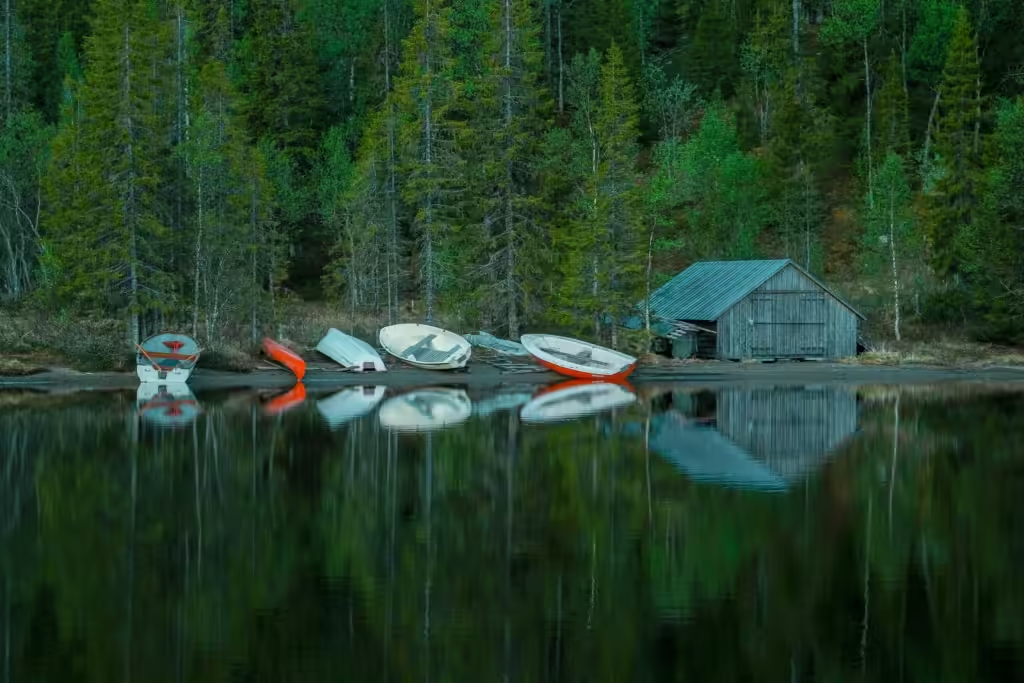
This is why trips that look ordinary from outside can outlast bigger ones. A four-day return to a small city you know well. A week at one lodge. A train route with the same breakfast ritual. A cabin near a lake. A slow national-park trip like the ones I think about in my Grand Canyon and Utah guide. Not everything meaningful has to announce itself loudly.
The 3-day rule — and why most trips should be 7
The 3-day rule is my private test for whether a trip has enough time to become more than transit. Day one is arrival. Day two is adjustment. Day three is when I usually start to feel the place instead of managing it. This is not scientific law. It is a pattern I have noticed in myself, friends, readers, and hotel lobbies all over the place.
On day one, your body is still negotiating. Flights, bags, transfers, check-in, room temperature, hunger, time zone, shower pressure, first dinner, first wrong turn. Day one is fragile. Do not load it with meaning.
Day two is when travelers often overcompensate. They wake up determined to justify the trip. Museum, market, guide, lunch, neighborhood, shopping, dinner. The day becomes a receipt. This is where happiness gets crowded out by proof.
Day three is different. You know where breakfast is. You understand the elevator. You have one landmark in your body. You stop checking the map every twelve seconds. The trip begins to feel less like a project and more like a temporary life. The shift is small but real.
That is why most trips should be at least seven days if the goal is more than escape. Seven days gives you one arrival day, one adjustment day, three engaged days, one open day, and one ending day. It gives memory enough material. It gives you a chance to repeat something. It gives the nervous system time to stop treating the destination as a task.
Of course not every trip can be seven days. Work, money, kids, care responsibilities and life all interfere. But when the choice is one rushed “big” trip or a slightly simpler seven-day trip, I usually choose the simpler week. Fewer cities. Better sleep. Deeper rhythm.
This is where luxury money is best spent: buying time and reducing friction. Arrive earlier. Book the direct flight. Add the buffer night. Stay longer in one hotel. Hire the guide on day two, not day one. Put the big dinner near the end. Do laundry instead of changing cities. Build one day that looks underplanned on purpose.
The best version of travel happiness is not constant happiness. It is spaciousness. The feeling that your attention has somewhere to go. The feeling that time is not chasing you down the hallway. The feeling that a place has had enough days to become specific.
Does travel make you happier? Sometimes. For a while. More often when it is planned to reduce stress, shaped around engagement, and honest about what it can and cannot fix. The trip will fade. That is not failure. The question is what remains after the glow drains off.
If what remains is one clear memory, one changed appetite, one gentler rhythm, one place you understand better, one person you loved more tenderly for a few days, or one decision you finally heard yourself make, then yes. Travel did something. Not everything. Something.
Five Questions People Actually Ask
Does travel actually make people happier?
Yes, but usually temporarily. Research suggests happiness rises before and during travel, then fades over several weeks unless the trip creates meaning, engagement, connection, or durable memory.
Why do I feel sad after a good trip?
Because contrast is real. You leave a heightened state and return to ordinary routines. That does not mean the trip failed; it means the trip gave your brain something different and now it is recalibrating.
Are weekend getaways worth it?
Yes, when logistics are easy and the goal is a clean reset. No, when the weekend becomes airport stress, overbooking, and a fantasy that 48 hours can repair a structural problem.
What kind of trip creates the strongest memories?
Trips with engagement: mild effort, social texture, agency, a strong ending, and enough time to move past logistics. The most expensive trip is not automatically the most memorable one.
How long should a happiness-focused trip be?
Seven days is my ideal minimum for a trip meant to do more than interrupt routine. Three days is when many people finally arrive emotionally; seven gives that arrival somewhere to go.
Where to go next?
- Luxury Travel 2026 — the wider framework for spending on trips that feel considered, not merely expensive.
- Grand Canyon and Utah — a useful next read if you want space, scale, and a slower kind of happiness.
- In the Heart of the Amazon — for a deeper, slower trip where attention matters more than checking off places.